Abu Fana
You are here
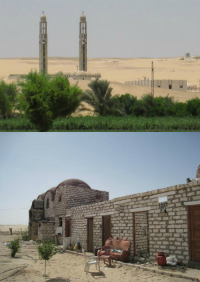
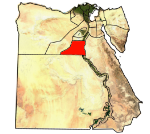 In May 2008, following a conflict over land which had lasted almost ten years, Bedouins attacked the monastery of Abū Fānā, 300 km south of Cairo in the governorate of Minya. Monks had been reestablishing monastic life near the ruins of an ancient monastery, seeking to obtain as much of the surrounding desert land as possible for agriculture and building construction. During the same period the settled Bedouin community was expanding their village into the desert; the clashes occurred on disputed lands that not properly registered with the Egyptian authorities by either side.
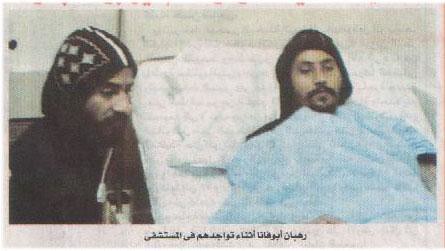
  In the altercations three monks were briefly kidnapped and tortured. One young Muslim who apparently watched the assault was killed. This case received extensive national and international press. In Coptic and Western media it was mostly described as a sectarian conflict, meanwhile most Egyptian media described it as a dispute over land which had turned violent. The predominantly partisan reporting along religious lines had the affect of deepening the tensions. Very few actually reported aspects that appeared to be true.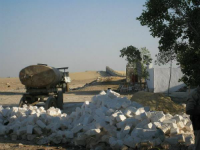
Building a new wall to deter attacks
Drs. Cornelis Hulsman, editor-in-chief of Arab-West Report, investigated this incident extensively with the help of CAWU staff and interns. The chair of the Center for Arab-West Understanding, Sawsan Gabra, was closely involved in analyzing the obtained data. This resulted in the number of articles listed below.
In this process, the need for the contextual studies was realised as such articles could be used for reconciliation in the aftermath of such conflicts. This shaped the design of the Abū Fānā peacemaking project.
See pictures from CAWU trips to the Monastery here.
A number of articles, reports, interviews and press reviews were created in order to critique false reporting and correct misinformation on the Abū Fānā incident. Please see below.
Papers
- 'Land-Owner Disputes in Egypt: A Case Study of the Abū Fānā Tensions in May 2008,' Arab West Report Paper no. 15 (26 August 2009) by Asger Toft Johannsen, Marianne Nabil Mahrous and Maria Graversen
- 'Coptic Activism and Media Reporting in the Aftermath of the Abū Fānā Monastery Attack', Arab West Report Paper no. 13 (February 2009) by Janina Chetty
Reports
- 'Christian/Muslim Tensions around the Monastery of Abū Fānā in Context', Arab West Report (12 November 2008) by Cornelis Hulsman and Sawsan Gabra
- 'Trip to Abū Fānā September 9, 2008', Arab West Report (15 September 2008) by Maria Graversen
- 'Evaluating the Tensions related to the Monastery of Abū Fānā', Arab West Report (21 September 2008) by Cornelis Hulsman
- 'Preparations for a Second Visit to Minya and the Monastery of Abū Fānā', Arab West Report (2 August 2008) by Cornelis Hulsman
- 'Saint Abū Fānā' Arab West Report (30 July 2008) by Cornelis Hulsman
- 'Background on the Monastery of Abū Fānā: July 2001 - August 2008' Arab West Report (30 July 2008) by Ra'ed al- Sharqawi
- 'Chronology in Restoring the Historical Church of Abū Fānā', Arab West Report (1 August 2008) by Cornelis Hulsman
- 'The Abū Fānā Story: A Meeting in the house of 'Abd al- Qādir Abd al-Rahmān', Arab West Report (3 June 2008) by Marianne Nabil Mahrus
Interviews
- 'Tensions around the Monastery of Abū Fānā as viewed by one of the Monks' Arab West Report (14 July 2008) by Cornelis Hulsman
- 'Chief of Arab Bani Khaled responds to the tensions surrounding the Monastery of Abū Fānā', Arab West Report (16 July 2008) by Baher Dokhan
- 'Two Prominent Shaykhs from Māllāwi respond to the tensions surround the Monastery of Abū Fānā' Arab West Report (14 July 2008) by Baher Dokhan
- 'Monks of the Monastery of Abū Fānā talking about the Attack on May 31 2008', Arab West Report (27 July 2008) by Cornelis Hulsman
- 'Governor Ahmed Dia el- Din speak out about the Tensions Surrounding the Monastery of Abū Fānā [2]', Arab West Report (29 July 2008) by Cornelis Hulsman
- 'A Meeting Held in the Governorate of Minia after the Abū Fānā Attacks' Arab West Report (3 June 2008) by Marianne Nabil Mahrus
- 'Fr. Basilius on Monasticism, in Light of Abū Fānā' Arab West Report (11 November 2009) by Jayson Casper
- 'The Abū Fānā Story: Interview with Father Cyril' Arab West Report (3 June 2008) by Marianne Nabil Mahrus
- 'The Abū Fānā Story: Interview with Bishop Aghabius' Arab West Report (3 June 2008) by Marianne Nabil Mahrus
- 'The Abū Fānā Story: Interview with Ihāb Ramzī' Arab West Report (3 June 2008) by Marianne Nabil Mahrus
Press Reviews
- 'Attacks against the Coptic Orthodox Monastery of Abū Fānā [1]'
- 'Attacks against the Coptic Orthodox Monastery of Abū Fānā [2]'
- 'Attacks against the Coptic Orthodox Monastery of Abū Fānā [3]'
- 'Attacks against the Coptic Orthodox Monastery of Abū Fānā [4]'
- 'Attacks against the Coptic Orthodox Monastery of Abū Fānā [5]'
- 'Attempts to Resolve the Problem of Abū Fānā [1]'
- 'Attempts to Resolve the Problem of Abū Fānā [2]'
- 'Abū Fānā: An Open End [1]'
- 'Abū Fānā: An Open End [2]'
- 'The Crisis of Abū Fānā: The Last Edition'